Continued service
Following his term as Lord Mayor Walter continued on the Corporation, as an Alderman through to 1955 and then as a Councillor from 1956 to 1960.
Cork Civic Party membership
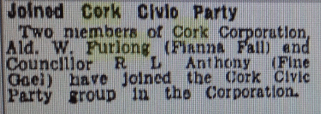
After years as an active member of Fianna Fáil, Walter joined the Cork Civic Party in 1954. The Civic Party was a pro-business political party, active 1945 to 1966.
Irish Independent Saturday, July 17, 1954
In 1956 Walter stood against Alderman Sean Casey (Labour) who was elected mayor.
Walter was a trustee of the Skiddy Charity. This was set up in 1630 under a bequest from a Stephen Scudamore to distribute rents and profits from his lands to “ten of the poorest and honestest people of said City, sole and aged 40 years at least” (Beecher, 1992). Elderly people lived in the almshouse which, a newspaper article reported in the mid-1950s had no gas or electric light, and cooking was only by means of open fires or primus stoves
Unemployment and emigration continued to be high through the 1950s, with a slow rise in real national income compared to Ireland’s European neighbours.[1] The 1957 general election was precipitated by the crisis in the trade balance. Fianna Fáil had tabled a no confidence vote in the then coalition government. Fianna Fáil’s manifesto supported free trade, differing from its previous position. Fianna Fáil was elected outright as the Government but Walter supported having a National Government for Ireland. (That didn’t happen.)
Some 38 years after his involvement in blowing up an R.I.C. barracks, Walter proposed a tribute on behalf of the Cork council congratulating the local Garda Superintendent on his promotion to Chief Superintendent.
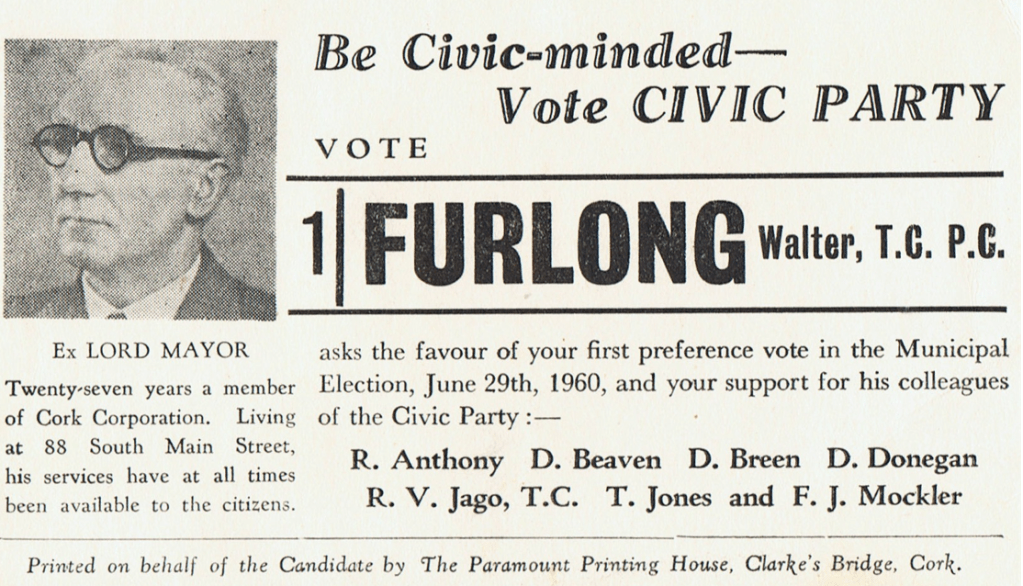
In 1960 Walter, finally exiting the Corporation, was acknowledged by the outgoing Lord Mayor, Senator Jane Dowdall, Cork’s first female Lord Mayor.
Irish Examiner, Monday July 11, 1960

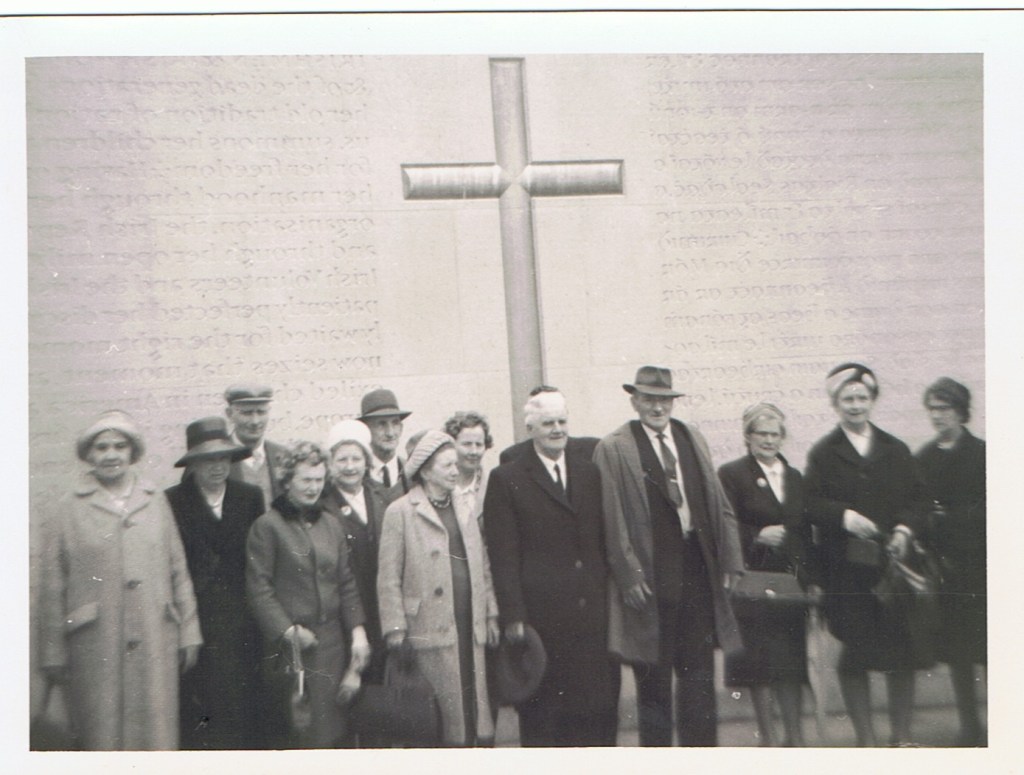
The Irish Examiner of Wednesday 25 April 1962 noted Walter amongst the surviving Cork Volunteers who attended Easter uprising commemorations.
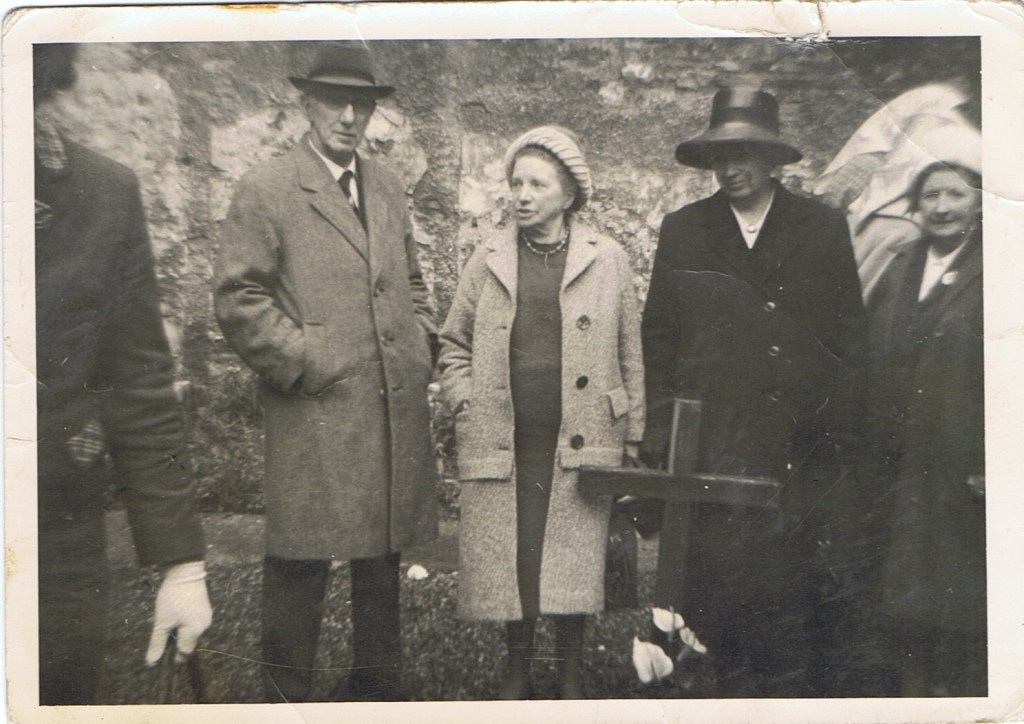
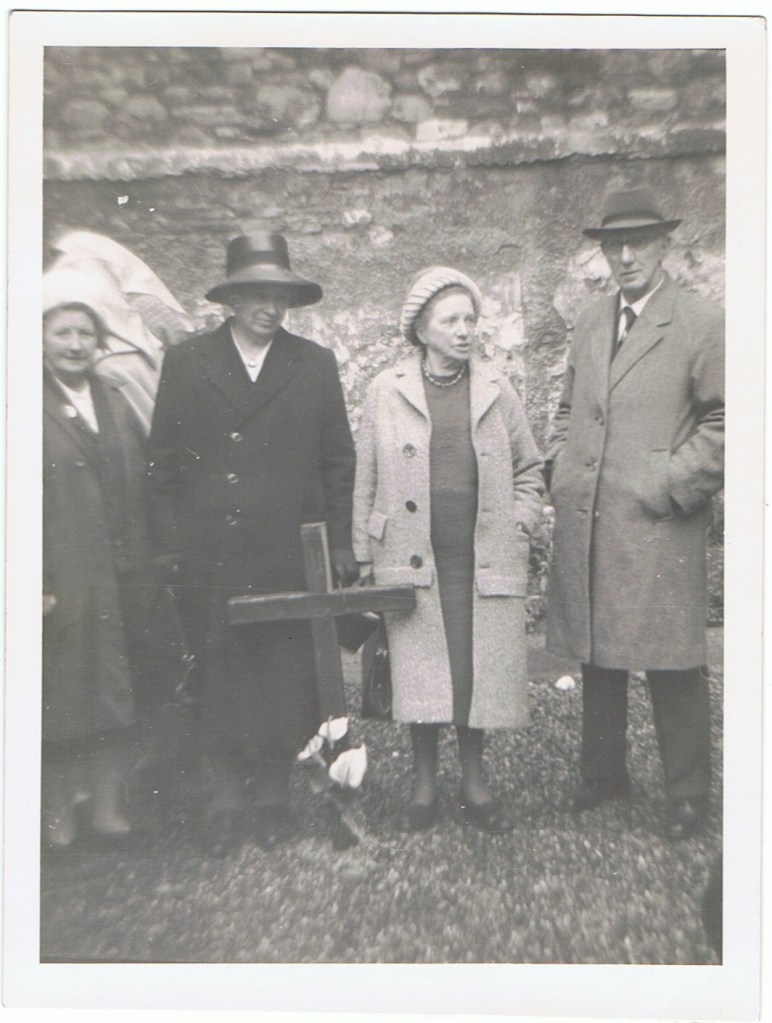
The following photos are of Walter and Helena attending 1916 commemorations, dates unknown.
[1] 8% versus 40%, 1949 – 1956. Source: UCC Émigré https://www.ucc.ie/en/emigre/history/
 In Search of Thomas Davis